
8 Best USB Hubs (2025), Tested and Reviewed Leave a comment
USB hubs ought to be easy gadgets, however apparently it is not potential to make One Port to Rule Them All with out issues getting a bit of messy. We have now a full explainer right here, however should you simply wish to get the fundamentals before you purchase your hub, right here are some things to remember.
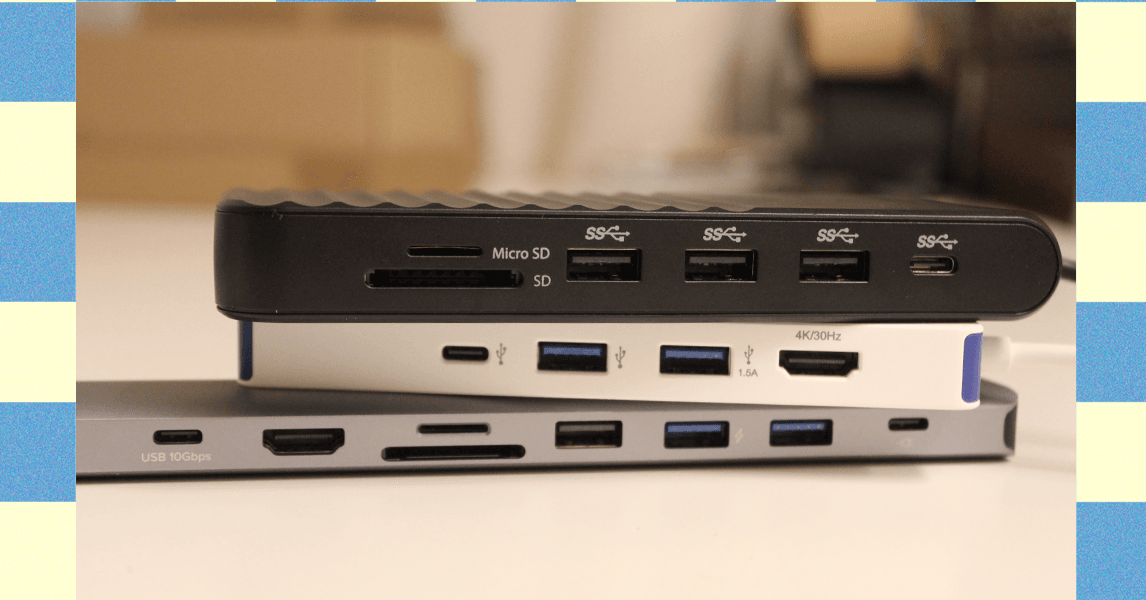
Ports speeds matter; model numbers do not. It is tempting to have a look at a USB 3.2 label and assume it is quicker than USB 3.0, however sadly, that is not the case. In actual fact, many producers have began defaulting to writing the velocity of particular person ports immediately onto the system itself, quite than counting on model numbers on spec sheets.
Use Thunderbolt in your most data-hungry gadgets. Thunderbolt is a beefed-up model of USB, developed by Intel and Apple, that makes use of the identical USB-C port you are conversant in. These can carry big quantities of knowledge (as much as 40 Gbps for Thunderbolt 3 and 4), which makes them excellent for issues like SSDs, 4K and 8K shows, or screens with ultrahigh body charges for gaming. We’re now as much as Thunderbolt 5, which is slowly making its approach into some laptops. (Be sure that your laptop computer port helps Thunderbolt.)
Do not forget the ability. Most USB hubs will draw electrical energy immediately out of your laptop computer to energy any gadgets linked to it, however they clearly must take up a port to take action. Nonetheless, some hubs help USB Energy Supply (or USB-PD, generally marketed as “passthrough charging”) which lets you plug a charger into one of many ports on the hub so you’ll be able to hold charging your laptop computer when you plug in all of your further devices.
