
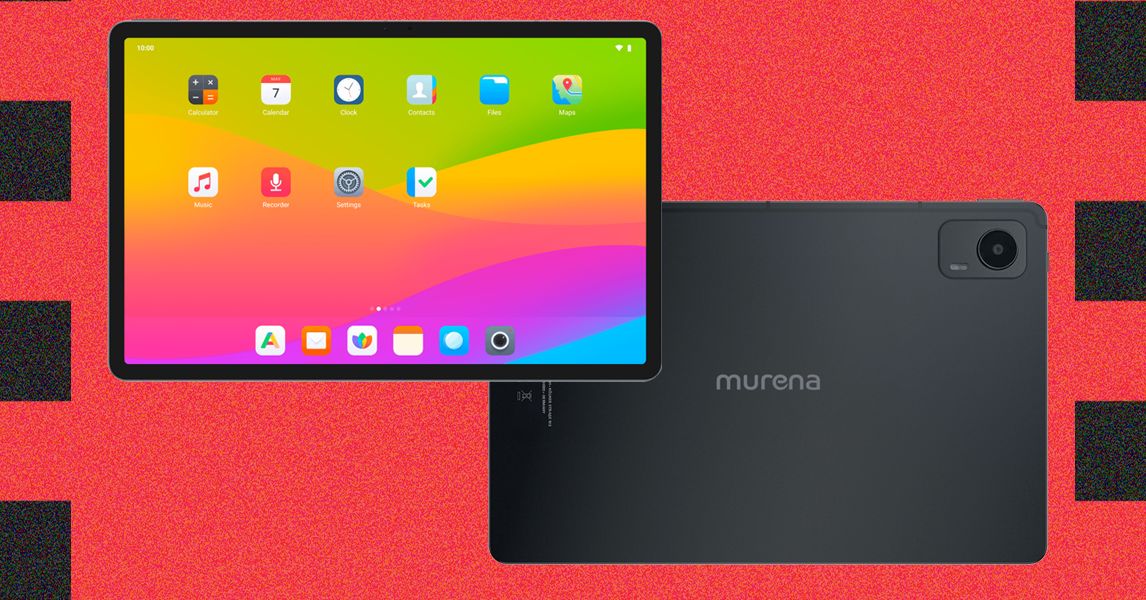
Murena /e/OS Tablet Review: Privacy for a Price Leave a comment
Contained in the Volla is an Octa-core, MediaTek Helio G99 chip—which, whereas not the quickest cellular chip round, was loads speedy sufficient for internet looking and watching 4K video. The one place I might see this chip as a limiting issue is in gaming. For that, you’d most likely need one thing extra highly effective.
Together with the processor you get 12 GB of RAM and 512 GB of built-in space for storing. There aren’t any further configuration choices, and disappointingly there is not any microSD card slot to develop the storage. There’s a sim card slot, although, and I used to be in a position to make use of the pill on T-Cellular’s community with none points.
The model of /e/OS that ships with the Volla is predicated on Android 14, which is a bit behind at this level, however is a minimum of the discharge which noticed Google lastly add just a few options that make it simpler for builders to construct apps for big screens. Any apps making the most of these options ought to work simply positive on /e/OS.
For its half, Murena has not added any tablet-specific instruments to /e/OS, the best way Samsung and OnePlus have constructed their very own productivity-enhancing UIs for his or her tablets. You get the options of inventory Android 14 within the type of break up display apps, however that is about it by way of tablet-specific options. The principle attraction is, in fact, the privacy-focused /e/OS and the shortage of Google Providers put in on the Volla. As an alternative, you get Murena’s providers (non-compulsory), or you are able to do what I do and use your personal internet providers (a mixture of Syncthing and NextCloud with another odds and ends). Both manner, you get to begin with out Google.
{Photograph}: Scott Gilbertson
This does imply that there will be points with apps. As I famous in my evaluation of /e/OS, some banking apps particularly appear to have points with microG, which is what /e/OS makes use of as a substitute of Google’s numerous APIs and instruments. On this pill, I bumped into one other concern that would presumably be associated to microG (although it may be hardware-related).
