
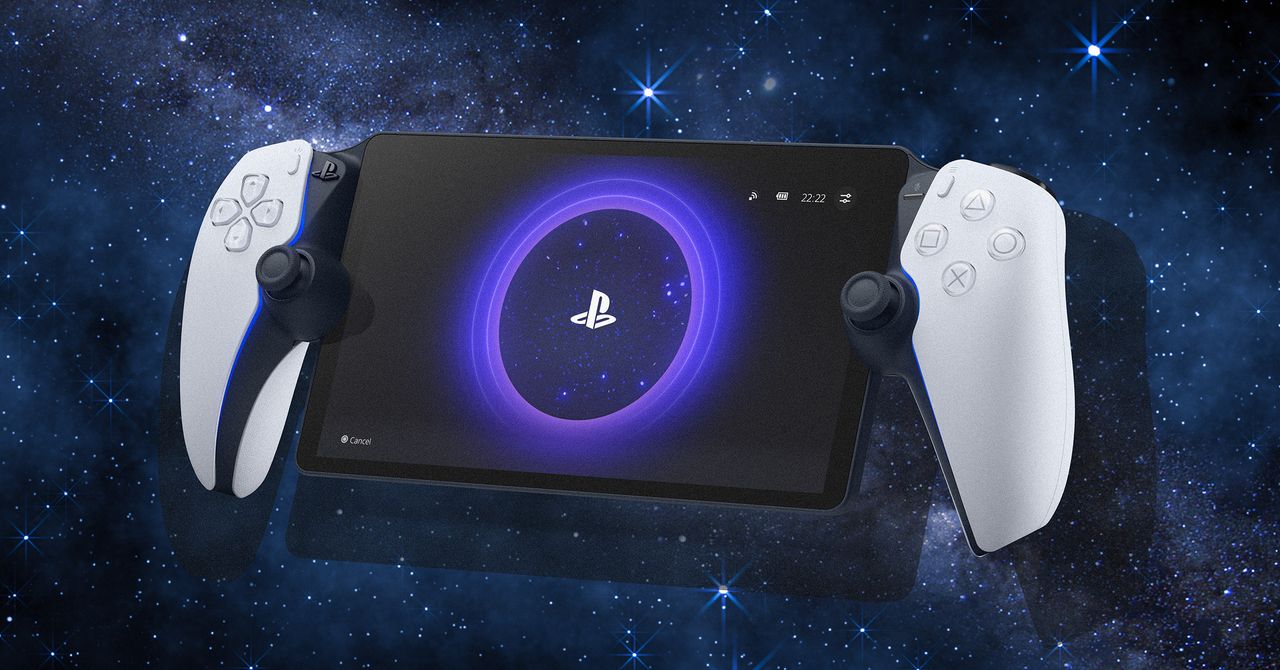
PlayStation Portal’s Latest Update Proves Sony Needs a Real Handheld Console Again Leave a comment
One other 12 months, one other replace to Sony’s PlayStation Portal. The newest tweak to the {hardware} significantly expands the roster of video games playable on the gadget—however the finish end result solely highlights how urgently PlayStation must re-enter the gaming handheld marketplace for actual.
The evolution of PlayStation Portal has been fascinating to observe, primarily to see Sony virtually scrambling to maintain up with the gadget’s sudden reputation. Launched November 2023, Portal was supposed as a mere accent for PlayStation 5. It had no native processing skills, merely utilizing Sony’s Distant Play know-how to stream no matter occurred on gamers’ private PS5 to the moveable’s display.
Though it might technically be used wherever with a robust Wi-Fi sign, difficulties connecting to public networks and excessive pace necessities to even launch a stream meant the Portal was successfully solely appropriate for in-home use, to unencumber the principle TV or play in one other room.
One way or the other, it nonetheless took off, with Sony Interactive Leisure CEO Hideaki Nishino saying in 2024 that the Portal had been a “big success.” The identical 12 months, Sony made it simpler to hook up with public Wi-Fi and added precise cloud gaming assist to Portal, with a collection of video games on supply to gamers subscribing to PlayStation Plus Premium. The preliminary providing included “over 120 PS5 video games from the PS Plus Recreation Catalog,” although the curated library was topic to alter. It might have been an enormous shift in how gamers approached {hardware} and software program alike, however, in observe, did not actually ship.
Even so, one other 12 months on and the Portal’s success appears unstoppable. Sony’s Takuro Fushimi lately advised TechRadar that “the group’s response has been overwhelming” and that Portal is now the “most generally used gadget for PS5 Distant Play.” It is little shock, then, that Sony retains making an attempt to hammer it into one thing that appears, for those who squint, just like the standalone gaming handheld it was by no means supposed to be, however that gamers so desperately need.
Clearer Skies?
Enter the latest replace to PlayStation Portal. It takes Cloud Streaming out of its beta section, increasing the streamable library from solely these titles included within the PS Plus choice to many video games digitally owned by gamers. Till now, if you did not have a recreation put in domestically in your PS5 or it wasn’t included in that cloud catalog, too unhealthy, no Portal play for you. Going forwards, you can cloud stream many titles in the event that they’re tied to your PlayStation account by means of buy on the PlayStation Retailer—though you’ll nonetheless should be subscribed on the PS Plus Premium tier to make use of the function, which can set you again $160 for a full 12 months.
The assortment obtainable is already huge—greater than 3,000 video games at time of writing. On the face of it, this ought to be a transformative growth for not simply the Portal, however PlayStation as a gaming ecosystem. It probably extends availability of titles you personal to wherever you wish to play them, and will even assist alleviate knowledge storage woes. Though the PS5’s inside drives will be expanded, SSDs will be expensive at larger capacities, and gamers with giant digital collections usually cannot set up the whole lot they personal. Having the ability to stream video games tied to your account with out consuming up drive house might be an important workaround.
The replace additionally goals to enhance the broader participant expertise on Portal. It lastly provides the flexibility to make in-game purchases when cloud streaming (probably helpful if you wish to purchase some DLC or digital forex), and permits gamers to obtain recreation invitations to multiplayer periods when enjoying a recreation by way of the cloud. Beforehand, these options had been solely enabled for Distant Play gaming on Portal, since they had been successfully being executed by means of the PS5 and mirrored on the Portal’s display. Accessibility options have additionally been improved, including a display reader instrument and adjustable textual content sizes.
