
DoorDash Reservations Scored America’s Most Exclusive Restaurants Leave a comment
At The Eighty-Six in Manhattan, exclusivity is the purpose.
The luxe, 11-table steakhouse is the form of place that lavishes caviar and aged mimolette cheese on its potatoes, and crows that your market-price duck was raised by one Dr. Joe Jurgielewicz, DVM, within the rural hills of Pennsylvania. Taylor Swift has reportedly dined there in a Miu Miu skirt.
Reservations are a scarce commodity that the restaurant, and New York legislation forbids you from promoting one. “Entry is the primary asset,” wrote meals author Helen Rosner in a current New Yorker evaluation of The Eighty-Six. “The product is the door, and what a door! An unimaginable door!”
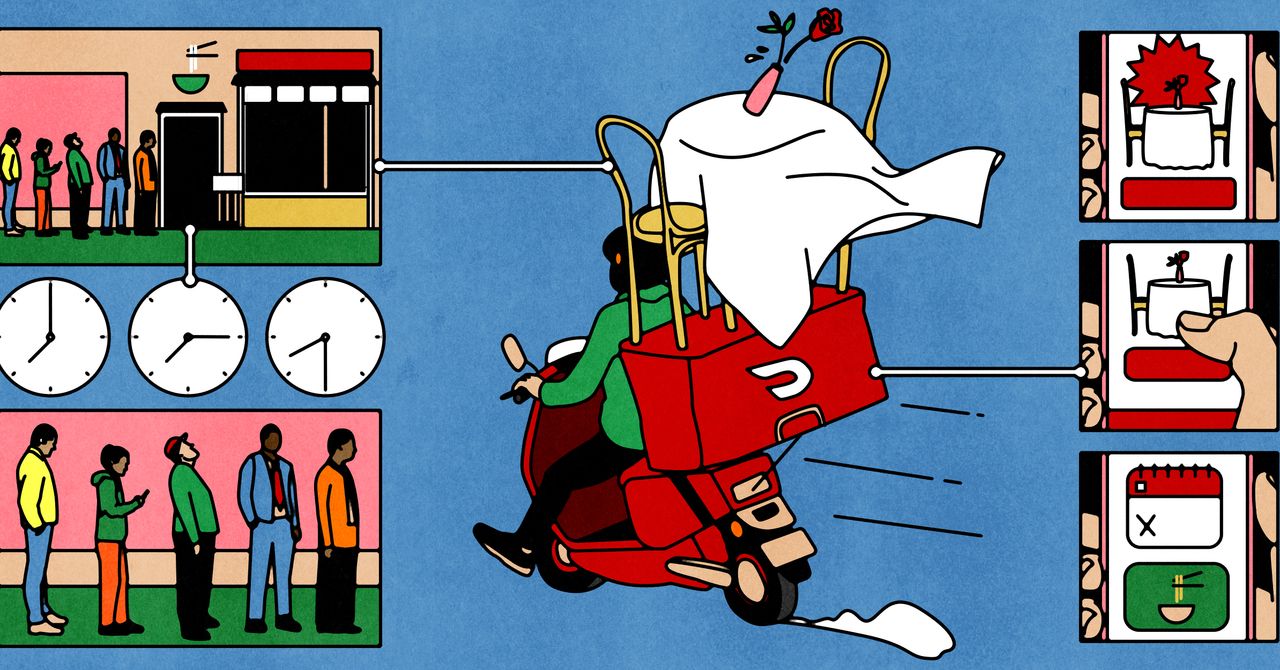
What could also be extra shocking is that arguably New York’s most unique restaurant will put aside house for diners solely by way of “desk drops” for The Eighty-Six on DoorDash, a meals logistics app that till lately positioned its bets on the notion that you just’d reasonably eat burritos at house.
After buying hospitality tech firm SevenRooms final 12 months, DoorDash has plunged whole-body right into a raging battle with competing reservation corporations for management over an more and more scarce asset: seats at among the most unique eating places within the nation.
“We’re providing worth to clients to find new eating places for informal eating,” DoorDash CEO Tony Xu instructed buyers in a February 2026 earnings name. “We’re additionally doing it within the type of entry— the place we’re providing reservations to among the greatest eating places.”
Equally unreservable New York sister eating places Or’esh and The Nook Retailer, likewise, won’t prevent a seat besides by way of DoorDash’s app and web site. Unique preparations with DoorDash and SevenRooms additionally maintain for among the most gate-kept eating places in Miami, like Michelin-recognized Ecuadorian scorching spot Cotoa or Miami-London steakhouse Sparrow Italia.
To this point, DoorDash has rolled out reservations in 13 of the biggest US cities, together with Los Angeles, Las Vegas, and Chicago. However many extra are slated.
Deep within the Reservation Wars
Possibly it is the aftermath of the Covid-19 pandemic, which accustomed the nation to wildly lengthy incubation occasions on plans for foods and drinks. Or perhaps it is only a signal of rising wealth inequality, as middlebrow eating places battle however ultra-exclusive experiences for the rich proliferate.
However as WIRED’s colleagues at Bon Appetit famous a couple of years again, restaurant reservation mania has lately spiraled into aggressive sport, resulting in a grey economic system of gig-work line-standers and a harmful black market of restaurant scalpers who hoarded reservations and resold seats to excessive bidders.
A parade of American cities, starting with New York, have since outlawed reservation scalping after lobbying by restaurant teams. What’s taken its place is a brand new pitched battle amongst restaurant reservation apps.
DoorDash is the latest and maybe most disruptive entrant in these reservation wars, as reservation apps leverage restaurant entry to carry diners into a complete loyalty-based ecosystem—usually by way of partnerships with bank card corporations that accrue loyalty advantages.
DoorDash Shifting in Quick
“However nobody appears to be transferring in as rapidly, or as aggressively, as DoorDash, already the biggest eating supply app within the nation earlier than folding in SevenRooms. DoorDash has been fast to press this benefit by locking down unique entry to among the most in-demand tables throughout the nation.
In Manhattan alone, greater than 200 eating places have present or pending offers with DoorDash to supply unique tables, occasions, or reservations. On the February earnings name, DoorDash CEO Xu laid out the technique: changing into an every little thing app for eating places to seize clients.
“It is form of proving the thesis,” he instructed buyers. “When you can add the best-in-class [hospitality] software program with the biggest demand generator platform, which is DoorDash, it’s a actually invaluable asset.”
