
Exclusive: Metalenz Has Figured Out a Way to Make Face ID Invisible Leave a comment
We’re all too acquainted with the notch—the ugly cut-in that graced many smartphones for years, just like the iPhone X or the LG G7.
The notch has largely been changed on at the moment’s smartphones by floating punch-hole cameras that take up much less area and look a bit of extra futuristic, although notches are nonetheless prevalent on some laptops, like Apple’s MacBooks.
On the iPhone, Apple calls its floating pill-shaped digital camera system the Dynamic Island, which debuted on the iPhone 14. The iPhone nonetheless has the most important digital camera cutout at the moment, because of its Face ID biometric authentication system. (Barring Google Pixel telephones, the overwhelming majority of Android telephones do not supply a safe face authentication equal, so they do not want a cumbersome digital camera cutout.) This island might get a lot smaller, nevertheless, because of new under-display digital camera know-how introduced at Show Week 2026 from Metalenz, a optics startup from Boston.
A Primer on Metasurfaces
Metalenz’s optical metasurfaces know-how is a flat-lens system that makes use of a fraction of the area of conventional multi-lens parts in most smartphones. You may learn extra about it in our authentic protection of the corporate right here, however briefly, as an alternative of refracting mild by way of a number of plastic or glass lens parts—which improves picture readability, corrects aberrations, and brings extra mild to the digital camera sensor—metasurfaces use a single lens with nanostructures to bend mild rays towards the sensors.
Metalenz says greater than 300 million of its metasurfaces are already utilized in shopper gadgets at the moment, changing cumbersome conventional optics in time-of-flight sensors that seize depth data and help with a digital camera’s autofocus.
The corporate additionally pioneered a way to make use of these metasurfaces to seize polarization knowledge. When mild hits an object with particular materials properties, it creates a novel polarization signature. Gentle reflecting off black ice has a unique polarization signature from mild reflecting off the street. Utilizing machine studying algorithms, this allows a system that may rapidly determine black ice on the street and alert the motive force.
{Photograph}: Courtesy of Metalenz
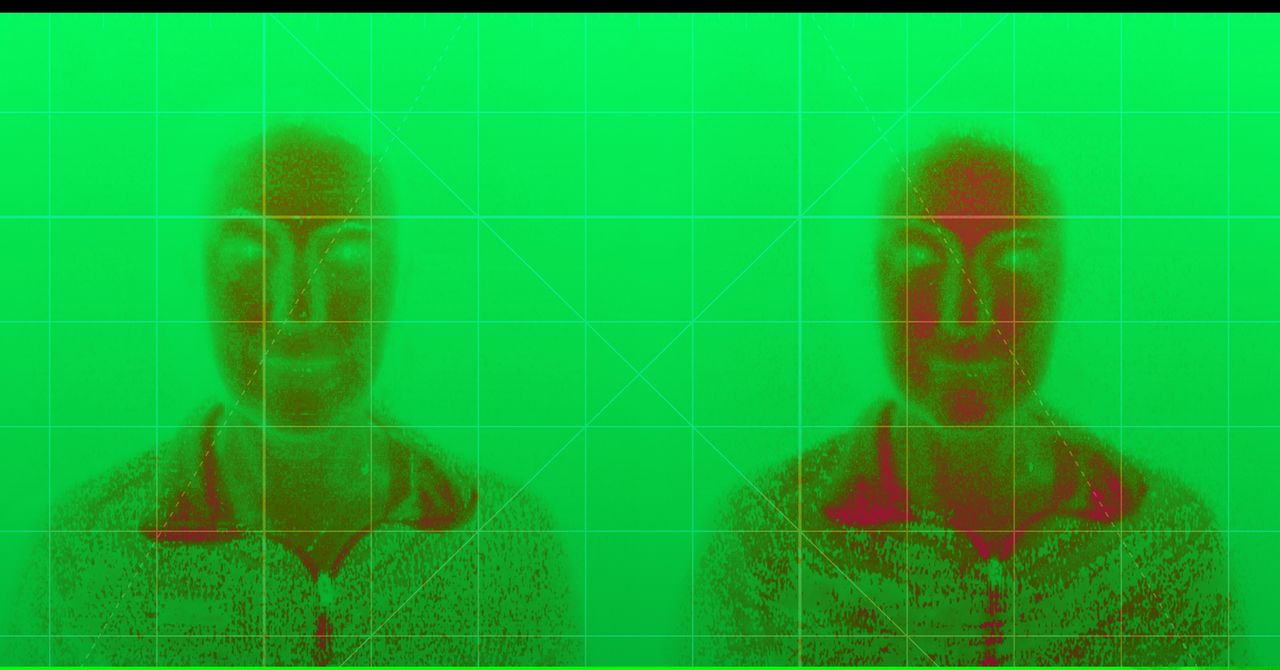
That is why the corporate developed Polar ID, a facial authentication platform to rival Apple’s Face ID. With polarization knowledge, its sensors can distinguish an actual face from somebody sporting an eerily correct 3D masks of the identical particular person, as a result of the polarization data from mild bouncing off a human’s pores and skin is exclusive in comparison with mild bouncing off the silicone of the masks. Sure, it is much more safe than Google’s face unlock system on Pixels, which may be spoofed with a high-quality 3D masks.
