
Meta’s Muse Is Adults-Only. Why Does It Look Like a Kids’ Toy? Leave a comment
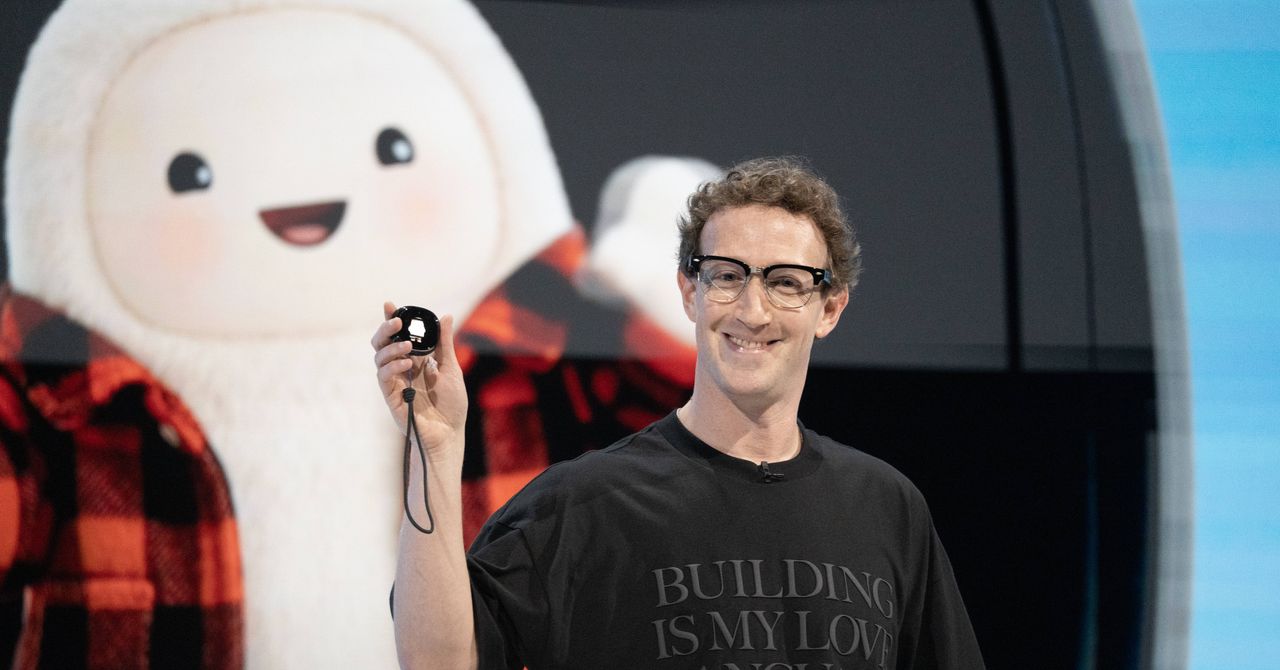
Meta’s Muse mascot is called Jolly. It is an lovely, cuddly illustration of Meta’s AI agent which you could gown nonetheless you need—like a doll. On the firm’s latest Meta Join occasion, CEO Mark Zuckerberg’s furry Muse donned a toga and laurel wreath. In Instagram advertisements I noticed for Muse, the mascot wore train gear and boasted about serving to with my health objectives. Later this 12 months, Meta plans to promote a Tamagotchi-style gadget on your Muse character. It’s all very kawaii-coded.
Though Muse’s capacity to finish digital duties rocketed it to the highest of the app charts, its Labubu-adjacent mascot latched this agent onto the cultural zeitgeist. Alexandr Wang, Meta’s chief AI officer, just lately posted nonstop memes of Jolly, generally in suggestive conditions. What stays perplexing to me is why a product for adults—Muse is restricted to these 18 and over—seems identical to a well-designed kids’s toy.
“It is a story seeking a narrative,” Meta spokesperson Daniel Roberts tells WIRED. “Folks need to have the ability to create their very own avatar with persona and distinctive model, as a result of it is enjoyable and brings them pleasure. We require everybody utilizing the Muse app to supply their date of delivery, we block individuals we detect could also be beneath 18 from creating an account, and we do further checks to assist guarantee individuals who say they’re adults are literally over 18.”
Mona Sarantakos, vp of Product Administration at Meta Superintelligence Labs, describes the design course of for Muse as leaning into “pleasant” components and meant to really feel much less awkward than chatting with “a company emblem or entity,” in a weblog put up she co-authored round Muse’s launch.
Youth advocates are already pushing again towards Meta’s Muse mascot. “Oh my God, it seems like a Teletubby,” says Josh Golin, an government director at Fairplay, a nonprofit that beforehand lobbied towards Meta’s focusing on of youngsters. “It’s so clearly a personality that may enchantment to very younger kids,” he says. “Individuals who examine kids’s media perceive that these rounded shapes notably enchantment to youngsters within the preschool age.”
Jolly’s enchantment just isn’t restricted to these in diapers. The lovely aesthetic of Muse’s mascot additionally attracts me in, a 32-year-old man residing in San Francisco. The branding could disarm individuals of all ages, particularly because the backlash towards Meta and generative AI continues to resonate with many Individuals.
“A lot of these cute components could make the product appear heat and fewer threatening,” says Julian De Freitas, an affiliate professor of selling at Harvard who focuses on AI companions. “There’s a excessive bar that they’ve to beat right here, as a result of attitudes towards Meta are fairly unfavourable after the social habit rulings.” In August, Meta settled claims relating to social media habit, agreeing so as to add restrictive options for teenagers on Instagram and Fb in addition to paying out as much as $16.7 billion.
Some specialists I spoke with have been much less satisfied this design was meant to enchantment to kids, evaluating Muse’s mascot to Japan’s lengthy historical past of broadly counting on lovely characters to market expertise. Meta’s strategy just isn’t distinctive both. From the annoying chirping of Microsoft’s Clippy to the newer red-shelled OpenClaw lobster, AI assistants typically revolve round anthropomorphized characters.
Irrespective of your age, a cuddly creature representing an AI instrument might be disarming, even to the purpose the place you would possibly overlook about privateness issues. For instance, Meta trains its AI fashions in your Muse interactions except you decide out.
