
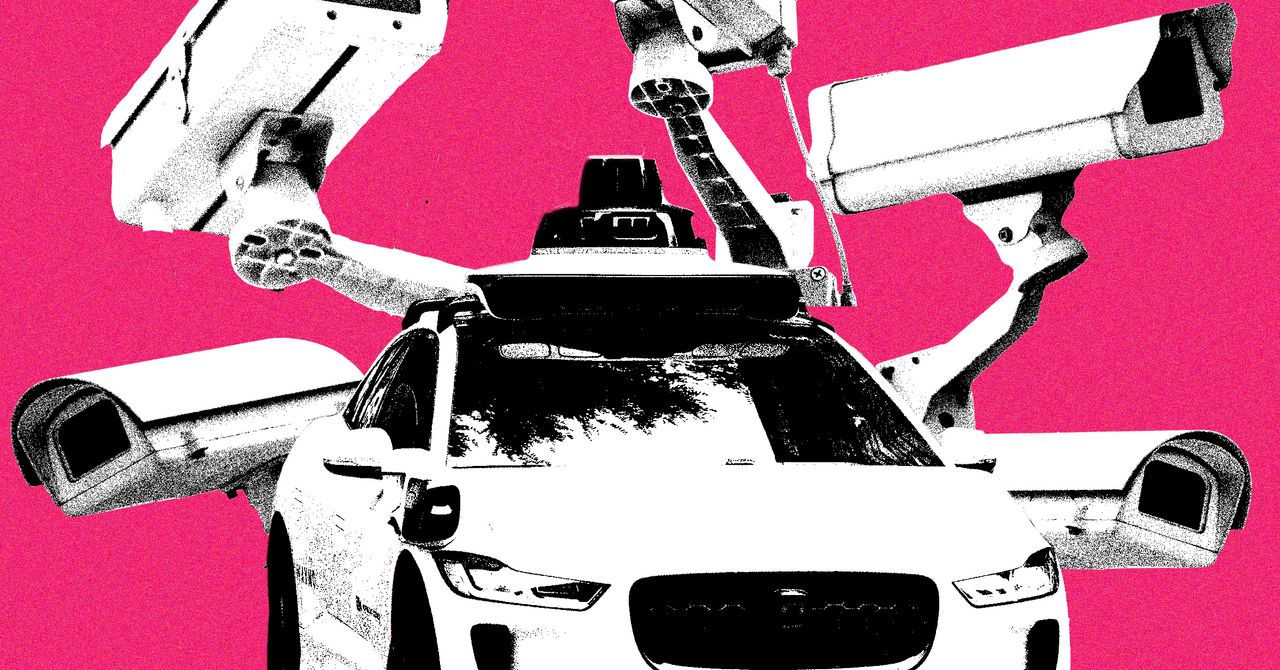
Your Driverless Cab Is Spying on You Leave a comment
One afternoon this previous summer season, a self-driving Waymo pulled right into a car parking zone in San Mateo County, California, and stayed there till the police arrived. Native cops had gotten a 911 name from Waymo staffers—people, it must be mentioned—who have been viewing the automotive’s passengers by way of cameras put in contained in the automobile. It seemed like two teenagers have been capturing a black handgun out the window of the automobile, taking part in with it and consuming between pictures, a police report mentioned.
The story has a contented(ish) ending: The gun was capturing water-filled Orbeez, not bullets. However the incident drew consideration to Waymo’s surveillance system. The automobiles are geared up with automated tech that may flag the presence of a firearm inside, the corporate mentioned.
The outsides of self-driving automobiles are studded with cameras, which assist them “see” the world round them. (Most additionally use different sensors, together with radar and lidar.) Much less appreciated are the cameras contained in the autos, which corporations say are important to holding riders secure and imposing their guidelines. Earlier this 12 months, Waymo mentioned it used its cabin cameras to do each after some California passengers, many of their twenties or older, reported that Waymo staff all of the sudden took over the autos’ intercoms mid-ride to verify they have been sufficiently old to journey on their very own. (One 35-year-old instructed WIRED he thought his backpack despatched up purple flags.)
Nonetheless, robotaxi privateness insurance policies may be broad. They recommend that footage captured inside autos can be utilized for a lot of innocuous and commonsense causes—to verify cleanliness between rides, to detect misplaced gadgets—but additionally to enhance their services or products. These catch-all phrases may cowl many makes use of. Specialists say that within the US, few clear guidelines govern this kind of surveillance, particularly as a result of riders typically should comply with prolonged “phrases of service” printed in minute fonts earlier than they use ride-hailing apps. That leaves riders to belief that the businesses are dealing with their data responsibly.
“We’re being primarily deserted by our lawmakers with regards to client privateness and what corporations can do with data after they’ve collected it,” says Matthew Guariglia, a senior coverage analyst on the Digital Frontier Basis, the place he works on surveillance and policing points. His recommendation? “Simply since you’re alone within the automotive doesn’t imply you’re alone within the automotive. You need to behave as if there’s a jumpy particular person within the entrance seat.”
Normally, robotaxi corporations together with Waymo, Zoox, and Tesla say that human workers view inside cameras solely when wanted. All say private information, together with recordings, could also be despatched to legislation enforcement or regulators. (A Waymo help web page says that authorities businesses in search of information “are directed to comply with legitimate authorized processes in making such request.”)
