
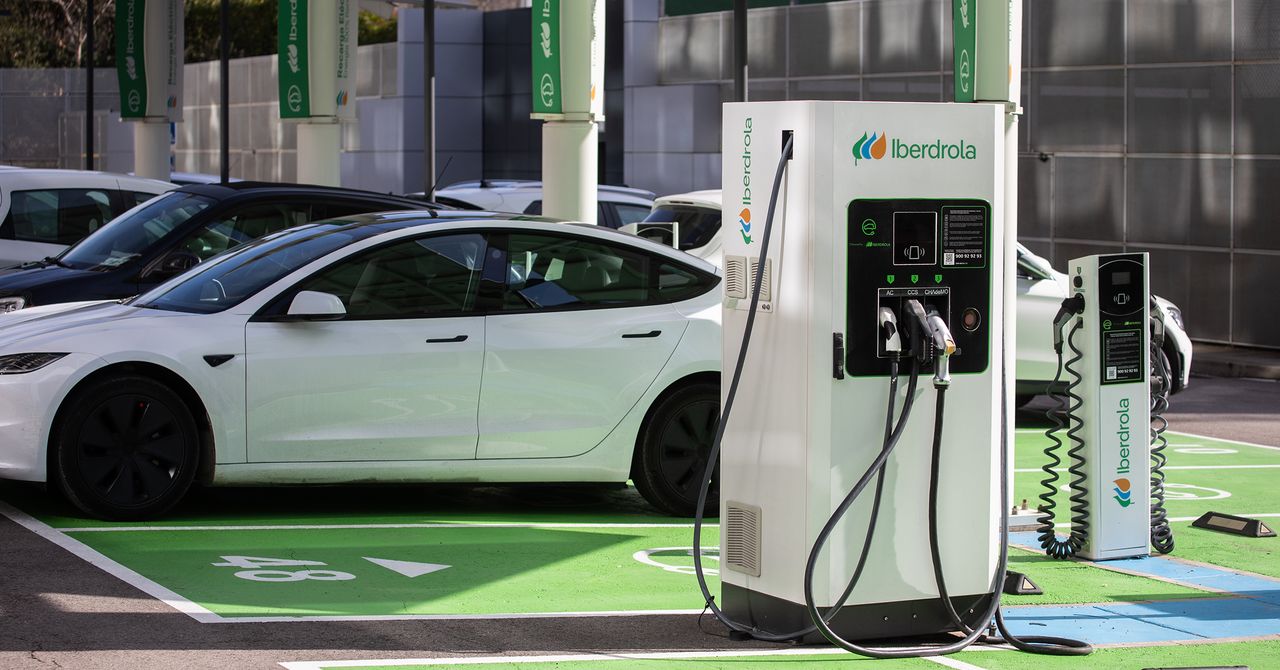
Here’s How AI Agents Can Protect EV Chargers Leave a comment
The variety of electrical autos on roads world wide continues to develop. The growth in EV adoption has pushed the event of accessible, quick, and environment friendly charging infrastructure.
Nonetheless, this growth additionally brings with it new cybersecurity dangers which were not been extensively studied, and for which there are nonetheless few viable options.
Cristina Alcaraz, an infrastructure-security researcher at Spain’s College of Malaga, explains that the legal responsibility of electric-vehicle charging stations is because of the truth that they combine a number of bodily and digital parts. She says this advanced structure not solely retains the chargers working effectively but additionally presents a bunch of latest and far-reaching safety vulnerabilities. Chargers’ publicity to assaults compromises each the continued adoption of EVs in addition to the steadiness of {the electrical} grids within the nations the place chargers function.
With the goal of tackling this risk, researchers from the NICS lab on the College of Malaga have developed an progressive proposal to deploy AI brokers to guard the infrastructure. These brokers are designed to stop cyberattacks from totally different vectors, starting from fraud or vitality theft by malicious actors utilizing the charging stations to bigger assaults that would injury critical-energy networks.
The workforce’s proposal goals to make sure the early and dependable detection of anomalies and assaults to charging networks utilizing the Open Cost Level Protocol. The OCCP customary is among the most generally used for the operation and administration of electric-vehicle chargers. The protocol permits a community of charging stations to speak with a centralized system that may handle, monitor, and coordinate all vitality transactions carried out by the tip customers.
The central system handles a bunch of issues remotely, together with consumer authentication, administration of {the electrical} load at every station, monitoring of total electrical energy consumption, and technical diagnostics. These capabilities permit for real-time infrastructure management and allow operators to identify and quickly reply to any anomalous habits.
Nonetheless, the authors of the brand new examine level out that present monitoring mechanisms based mostly on this protocol sometimes simply concentrate on community site visitors or native occasions, to allow them to solely provide a restricted view of what’s occurring throughout a whole area of infrastructure. The researchers say this limitation makes it tough to establish the place within the system an anomaly is going on, which community parts are compromised, the extent of any vulnerabilities, and the methods through which a possible assault would possibly unfold.
Name within the AI
The researchers suggest a system that makes use of a number of AI brokers. Every station or related element of the charging community incorporates AI brokers which can be able to analyzing their surroundings, accumulating data, and collaborating with different brokers with a purpose to construct a complete view of the infrastructure’s current state.
“Every agent assesses the standing of chargers, communications, and linked gadgets to detect anomalies, operational failures, or potential safety incidents,” says Alcaraz. “These brokers, that are linked to a central-monitoring system, examine the data obtained regionally with that of close by stations, offering a extra full, correct, and contextualized collaborative view of the state of affairs,” she says. Alcaraz can be the lead creator of the report.
The work, revealed within the Worldwide Journal of Vital Infrastructure Safety, explains that one of the vital novel options of the system is its use of a consensus mechanism based mostly on a mathematical framework often known as opinion dynamics.
This method mimics the processes by which people trade data inside their very own social networks to succeed in agreements. When utilized to laptop fashions, it permits AI brokers to share observations with one another and regularly modify their assessments to construct a collective understanding of the general state of affairs.
